Thank You for Your Sacrifices
A Quiet Design That Carries Weight—Not Just Words
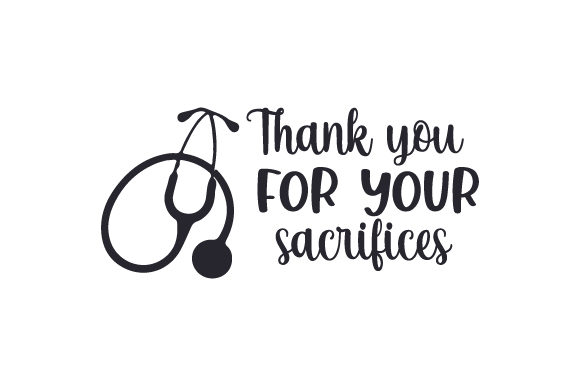
When I first opened Thank You for Your Sacrifices, I didn’t see a machine embroidery design—I saw a moment. A pause in the rush of daily craft production. It’s clean, centered, and intentionally uncluttered: no florals, no ribbons, no hearts or stars. Just thoughtful typography with gentle spacing and subtle weight variation in the letterforms. As a designer who’s stitched hundreds of medical-adjacent pieces—from NICU keepsakes to nurse appreciation gifts—I immediately recognized its quiet authority. This isn’t a cheerful “thank you.” It’s reverent. Grounded. Designed for people who’ve held space in hospitals, worn scrubs through 16-hour shifts, or sat beside beds when no one else could.
How It Lands on Real Projects—Not Just Screens
Last week, I prepped a batch of custom embroidered tote bags for a local pediatric clinic’s staff appreciation day. I chose Thank You for Your Sacrifices as the front-center motif—stitched on sturdy canvas with matte black thread. The result? Instant recognition. Nurses paused mid-step to read it. One told me, “It’s the first time something I wear felt like it *saw* me.” That’s the power here: this design doesn’t shout. It settles. And that makes it unusually versatile across real-world applications.
- Custom apparel: Works beautifully on sweatshirts and relaxed-fit tees—especially when placed high on the chest or centered on the back. Avoid tight-fitting stretch fabrics unless you test stabilizer layers first.
- Embroidered patches: Crisp and legible at 3.5"–4.5" width. Ideal for badge reels, lab coat lapels, or quilted aprons used in clinics or home health settings.
- Baby embroidery: Use with restraint—on a soft cotton blanket or onesie, but only if paired with minimal stitching (no dense fill behind text) and tested for tactile comfort.
- Holiday & gift embroidery: Fits seamlessly into gratitude-themed holiday collections—think linen tea towels for Thanksgiving, or pillow covers for caregiver support groups during National Nurses Week.
- Etsy & small shop product: Strong visual cohesion for bundles—pair it with simple monogrammed scrubs, minimalist stethoscope pouches, or printable mockups showing it on light and dark backgrounds.
Where It Needs Careful Handling
This design earns trust because it doesn’t overpromise—but it does demand intention. Its strength is also its vulnerability: clarity depends entirely on execution. Here’s where I’ve seen good intentions falter:
- Small hoop sizes (under 4"): The lettering stays readable down to ~3", but avoid going smaller unless you’re using a high-res commercial machine and testing stitch density closely. Tiny serifs or fine terminals may blur.
- Textured or loosely woven fabrics: Linen, terry cloth, or bouclé can swallow detail. Add medium-cutaway stabilizer and reduce top tension slightly to lift satin-stitch edges cleanly.
- Dark or black fabric: The design relies on contrast—not embellishment. Test thread color carefully. Charcoal gray or deep navy thread often reads more warmly than pure black on black.
- Curved surfaces (caps, curved pockets): The even baseline helps, but avoid placing it across seams or crown curves without re-hooping and manual adjustment. Better suited to flat panels—like the front of a scrub jacket or side of a duffel.
- Frequent-wash items: If using on kitchen towels or baby blankets, confirm your fill stitch density isn’t so low that letters fray after 10+ washes. A light running-stitch outline around each word adds durability without visual clutter.
What It Adds to Your Handmade Product—Beyond Aesthetics
As an embroidery file, Thank You for Your Sacrifices quietly elevates perceived value. Customers don’t just buy a phrase—they buy resonance. For Etsy sellers, that translates to fewer returns, more heartfelt reviews (“My RN sister cried when she opened it”), and stronger repeat engagement. For craft businesses, it supports brand consistency without demanding a full logo system—just one meaningful anchor design that fits across patches, apparel, and digital embroidery assets.
It also builds trust faster than decorative motifs. In medical-adjacent crafts, authenticity matters more than ornamentation. When a buyer sees this on a handmade product, they assume care was taken—not just in stitching, but in selection. That impression extends to packaging, photography, and even how you describe it in listings. Don’t call it “cute” or “adorable.” Call it “thoughtfully scaled,” “professionally digitized,” or “designed for legibility at human scale.”
Practical Designer Notes Before You Stitch
- Test the embroidery file on scrap fabric matching your final project—especially if using textured, stretchy, or dark materials.
- Check thread color contrast in natural light, not just screen previews. What looks bold on a monitor may disappear on oatmeal-colored canvas.
- Review stitch density: look for balanced fill areas—no thin gaps between letters, no overly dense sections that’ll pucker delicate fabrics.
- Confirm hoop size compatibility before loading. This design scales well, but always verify minimum dimensions in your embroidery software.
- Inspect small details: terminals, crossbars, and spacing between “f” and “o” in “for”—they define readability at distance.
- Test black-and-white mockups. Does it hold impact without color? It should.
- Compare performance on light vs. dark backgrounds. Adjust underlay or stabilizer choice accordingly.
- Use tear-away + cutaway combo stabilizer for most medium-weight fabrics. Skip lightweight fusibles—they won’t support the structure needed for clean letterforms.
- Verify licensing terms before selling finished products or bundling the digital embroidery file. Since it’s listed under Crafts and Medical, confirm whether personal-use-only restrictions apply.
Final Thought: It’s Not Just a Phrase—It’s a Pause Button
Thank You for Your Sacrifices doesn’t try to be everything. It’s not playful. It’s not trendy. It’s not built for viral appeal. But in a craft business saturated with noise, that’s its greatest strength. When stitched with care onto a well-chosen tote, a soft pillow cover, or a durable patch—it becomes a quiet act of acknowledgment. And in the hands of designers, Etsy sellers, and small shop owners who understand the weight behind those words? It becomes more than a design asset. It becomes part of the work.